

Searching for Shrooms

Stropharia aeruginosa + +
A medium-sized green, slimy woodland mushroom, found on lawns, mulch and woodland. The edibility of this mushroom is controversial; some sources claim that it is edible, while others claim it to be poisonous, although effects are little known and its toxic constituents undescribed.
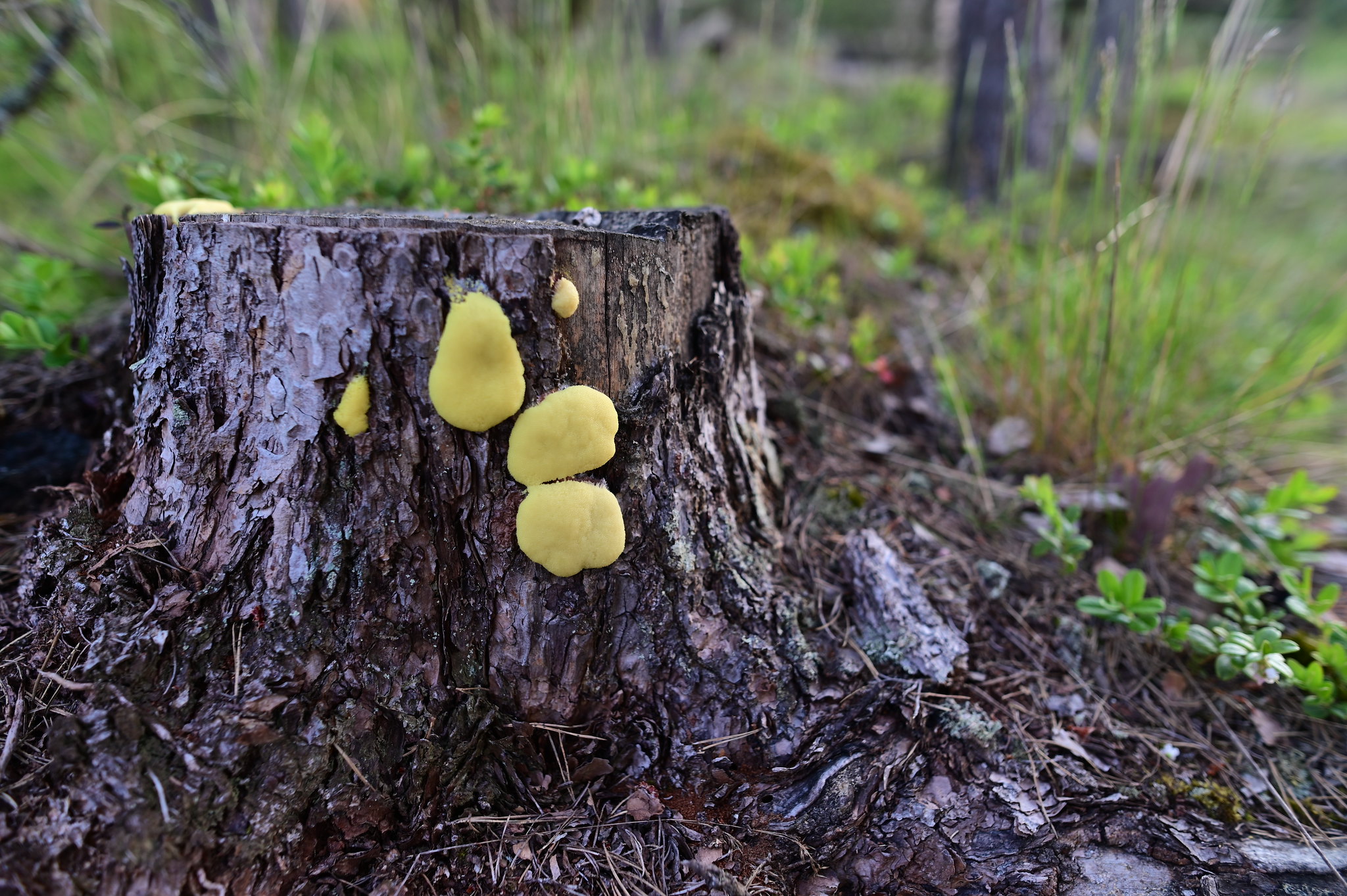
Fuligo septica + + +
Like many slime molds, the cells of this species typically aggregate to form a plasmodium, a multinucleate mass of undifferentiated cells that may move in an ameboid-like fashion during the search for nutrients.
In Finnish folklore, the mold was believed to be used by witches to spoil their neighbors’ milk. This gave it the name “paranvoi” (butter of the familiar spirit).
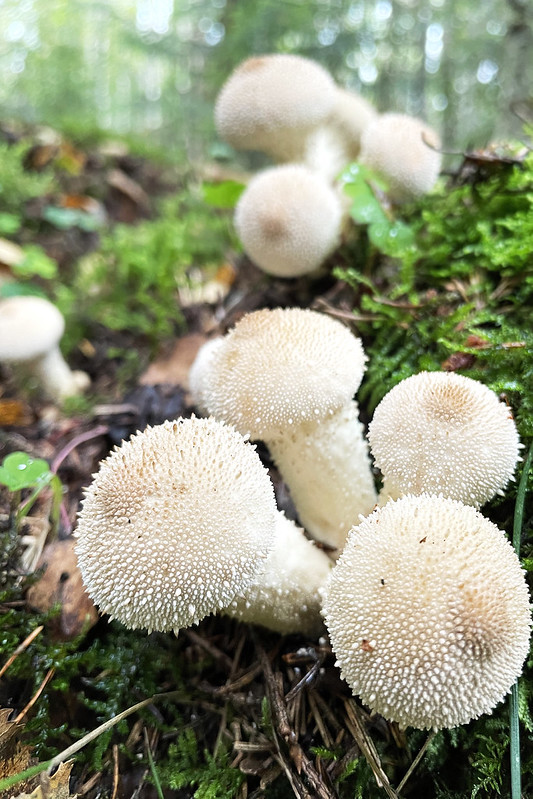
Lycoperdon perlatum * +
Lycoperdon perlatum, popularly known as the common puffball, warted puffball, gem-studded puffball or devil’s snuff-box. Lycoperdon perlatum is considered a good edible mushroom when young, when the gleba is still homogeneous and white. As they grow they turn inedible.
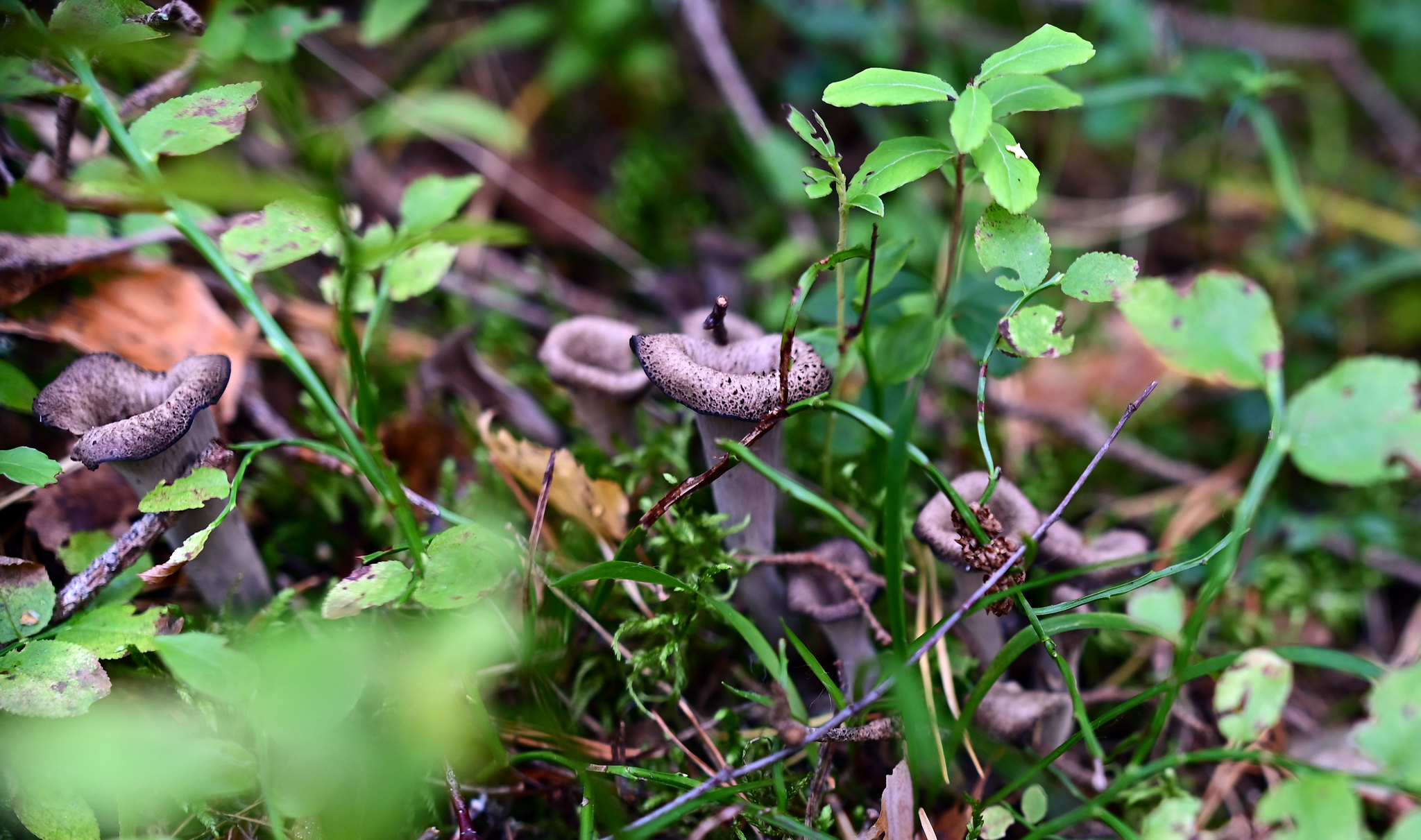
Craterellus cornucopioides * * *
Craterellus cornucopioides is a species of fungus commonly known as trumpet of the dead.
Despite their unpalatable appearance, it is edible. According to a Portuguese study, 100 grams of dried C. cornucopioides contain 69.45 g of protein, 13.44 g of carbohydrates (mostly mannitol, a sugar alcohol) and 4.88 g of fat, amounting to 378 calories. They contain fatty acids, primarily of the polyunsaturated variety, as well as phenols, flavonoids and 87 mg of vitamin C. They are also a significant source of biologically active vitamin B12, containing 1.09–2.65 μg/100 g dry weight.